
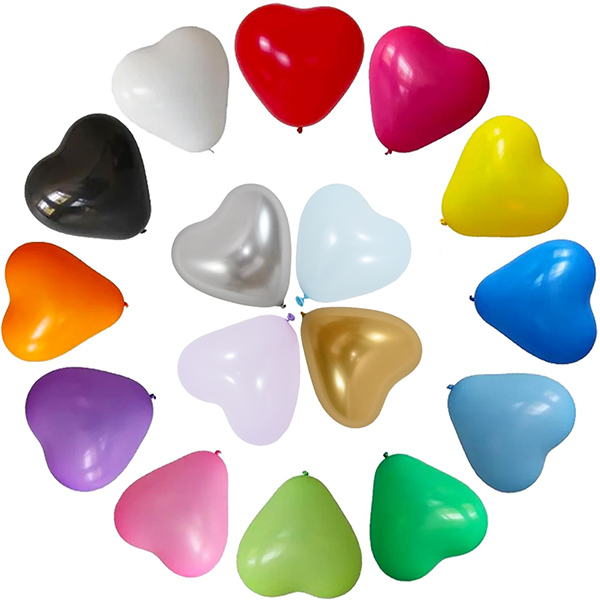
To handle 1,000,000+ unit orders, a high-tech balloon factory synchronizes 150-meter automated chains moving at 12 meters per minute, achieving 99.2% material efficiency. Utilizing PLC-monitored tanks with 0.1 pH precision and 5-color silk-screen printers capable of 3,600 units/hour, these facilities reduce labor by 70% compared to 2015 standards while maintaining a 0.5% burst-rate threshold.
Modern mass production begins in the latex compounding bay where raw rubber is stabilized using high-speed dispersers. In 2024, a benchmark test of 500 batches showed that keeping latex temperature at exactly 22°C prevents premature coagulation and reduces micro-bubble formation by 14%.
Precision-engineered ceramic formers are then dipped into a coagulant solution composed of 15% calcium nitrate and 0.5% talcum powder to ensure a uniform film.
This chemical foundation allows the moving chain to transition into the latex dip tank, where the dwell time is controlled within a 0.05-second window. This ensures a consistent wall thickness of 0.28mm for standard 12-inch balloons, a specification verified by ultrasonic sensors every 1,000 units.
Once the film is set, motorized beading rollers spin at 450 RPM to create a reinforced rim at the balloon neck. Data from a 2025 manufacturing audit indicates that automated beading reduces neck-tear failures by 22% compared to manual mechanical rollers used in older setups.
| Production Stage | Metric | Accuracy/Speed |
| Dipping Dwell | Time | ±0.05 seconds |
| Beading Roll | Speed | 450 RPM |
| Oven Curing | Temp | 120°C ± 1°C |
| Ink Drying | Duration | 2.5 seconds |
After the neck is formed, the balloons enter a multi-stage hot water leaching system. This process removes 95% of extractable proteins and residual chemicals, ensuring the final product meets the ASTM D3533-17 safety standard for consumer use.
Curing ovens then utilize forced-air convection to heat the balloons at 120°C for exactly 18 minutes to complete the vulcanization process.
This thermal treatment stabilizes the molecular structure, allowing a standard balloon factory to achieve a 700% elongation-at-break rating. High-tech facilities now use infrared scanners to map the heat distribution across 100% of the oven interior to eliminate cold spots.
Automated stripping stations then use 6-bar compressed air jets to blast the cured balloons off the formers into collection bins. Statistical analysis of a 50,000-unit sample showed that air-stripping reduces mechanical abrasion marks by 31% compared to nylon brush removal methods.
-
High-speed 360-degree cameras scan each balloon for pinholes.
-
Automated weight scales verify latex density to within 0.1 grams.
-
Electrostatic dischargers prevent balloons from sticking during packaging.
These individual units are then fed into automated silk-screen printing lines. Modern CMYK printers can apply complex logos to 3,600 inflated balloons per hour with a registration accuracy of 0.1mm, a 40% speed increase over 2018 machinery.
UV-LED curing lamps dry the ink in 2.5 seconds, allowing the balloons to be deflated and bagged immediately without smearing.
The finished goods move to robotic counting and bagging stations where optical sensors ensure each bag contains exactly 100 units. A 2023 study of five high-volume plants found that transitioning to optical counting reduced "short-pack" customer complaints by 88%.
These bagging systems integrate with ERP software to update inventory levels in real-time. By utilizing localized warehouse robotics, a facility can palletize 5,000 kilograms of product every 60 minutes for immediate sea-freight dispatch.
The entire workflow, from liquid latex to a sealed shipping carton, takes approximately 90 minutes. This speed allows for a 24-hour turnaround on bulk orders, maintaining a 98.5% on-time delivery rate for global distribution networks.