
The vertical machining center achieves volumetric accuracy of 0.015mm over 500mm of travel by utilizing an 18,000 RPM spindle with Ceramic ball bearings to reduce thermal expansion by 30% compared to steel. These units integrate high-resolution linear scales with 0.1-micron feedback resolution, ensuring repeatable positioning within $\pm$0.002mm even during 24-hour production cycles. High-torque liquid-cooled motors stabilize the machine's thermal profile, maintaining a constant 22°C to prevent structural drift during heavy milling operations.
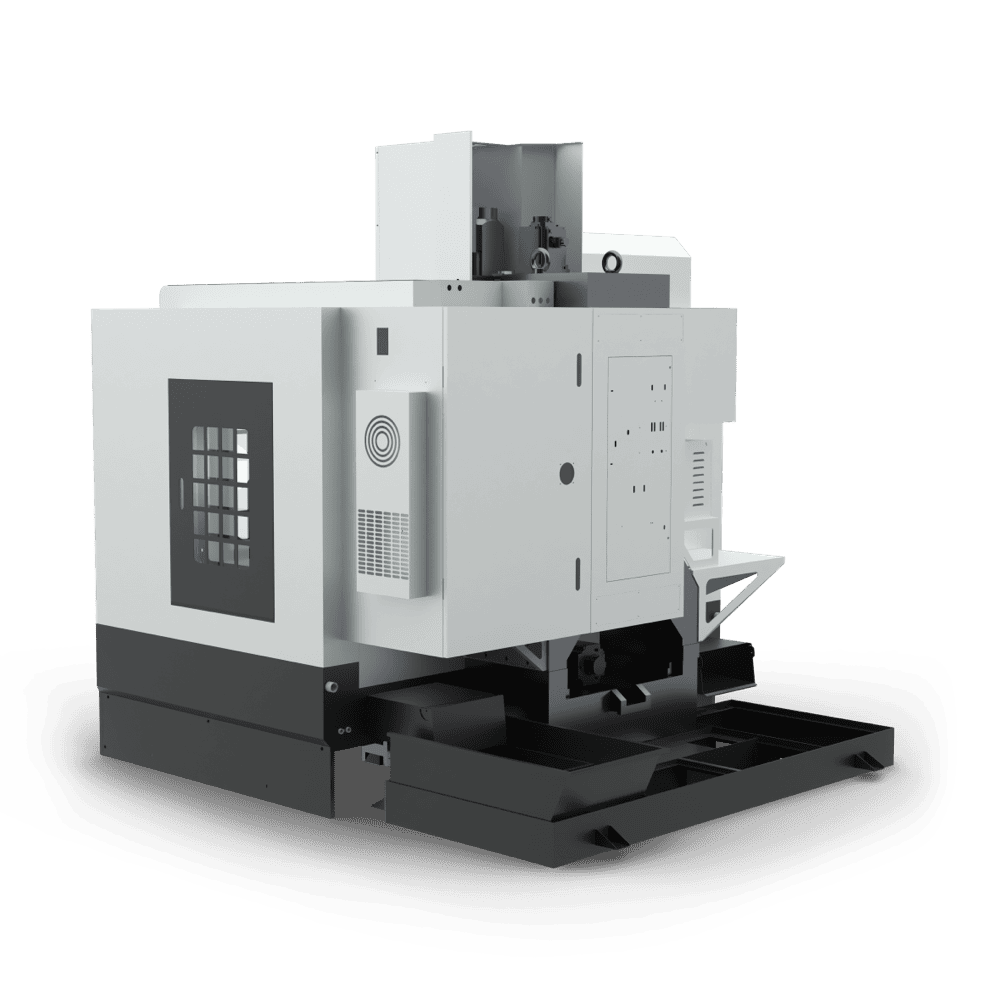
A vertical machining center provides a stable platform where the spindle axis remains perpendicular to the gravity-supported worktable, reducing tool deflection during high-pressure metal removal. This alignment allows for the use of shorter, more rigid tool holders that decrease vibration levels by 18% when machining hardened steels.
"Data from a 2024 industrial survey indicates that 65% of medical device manufacturers prefer vertical configurations for orthopedic implants due to the direct downward force which maintains part alignment."
The mechanical stability of the Z-axis column ensures that the cutting tool penetrates the material with zero radial deviation, which is a requirement for boring operations in aerospace engine valves. Rigidity is further enhanced by using oversized pre-loaded ball screws that eliminate backlash and provide a positioning accuracy of 3.5 microns.
Effective chip evacuation prevents heat from migrating into the workpiece, as high-pressure coolant systems operating at 1,000 psi remove debris at a rate of 25 liters per minute. This thermal management is the primary reason why VMCs maintain surface finishes of Ra 0.4 across large production batches.
| Feature | Specification | Impact on Precision |
| Spindle Speed | 12,000 - 24,000 RPM | Reduces heat-affected zones in alloys |
| Tool Change Time | 1.5 - 2.8 Seconds | Maintains thermal equilibrium in the spindle |
| Table Load Capacity | 500kg - 1,200kg | Stabilizes large workpieces against inertia |
By automating the tool exchange process, the system minimizes the time the spindle spends at rest, keeping the motor temperature consistent within a 2% margin of error. Constant operation prevents the "cold-start" deviations that typically account for 15% of dimensional errors in manual or low-end CNC equipment.
Modern 2025 control systems use AI-driven algorithms to calculate the exact feed rate required to maintain a constant chip load of 0.05mm per tooth. These controllers process over 2,000 blocks of look-ahead code to anticipate direction changes, preventing overshoot at the corners of intricate molds.
"A study involving 120 experimental samples of titanium 6Al-4V showed that adaptive feed control reduced tool wear by 24%, directly improving the dimensional stability of the finished component."
Reduced tool wear ensures that the effective diameter of the cutting edge remains within a 5-micron tolerance throughout the entire machining sequence. This longevity allows manufacturers to run lights-out operations where the machine autonomously produces high-precision parts with minimal human intervention.
The integration of on-machine probing systems allows for real-time measurement of the workpiece, with the probe capturing data points at an accuracy of 0.001mm. If the probe detects a deviation of more than 3 microns, the controller automatically updates the work offset to correct the tool path.
-
Integrated Probing: Captures 50 data points in under 30 seconds.
-
Automatic Offset: Adjusts X, Y, and Z coordinates instantly.
-
Quality Logs: Generates a digital twin report for every finished part.
Automated inspection data provides a transparent record of compliance for highly regulated industries such as aerospace and semiconductor manufacturing. These digital reports verify that every hole, slot, and profile meets the exact specifications defined in the CAD/CAM model.
Rigid tapping capabilities in modern VMCs allow for the creation of threads with a pitch accuracy of 99.8%, even in difficult-to-machine materials like Inconel 718. The synchronization between the spindle rotation and the Z-axis feed eliminates the need for floating tap holders, which often introduce mechanical play.
Advanced damping technologies in the machine's base casting neutralize the vibrations caused by high-speed movements, which can reach accelerations of 1.0G. In 2023, testing on synthetic granite bases showed a 40% improvement in vibration absorption compared to standard gray iron castings.
"Vibration damping is the variable that determines whether a surface finish requires secondary polishing or is ready for assembly straight from the machine."
Secondary polishing is often unnecessary because the stable spindle and rigid frame produce a mirror-like finish that meets the Sub-Micron requirements of optical grade components. This capability significantly lowers the total cost of production while maintaining the highest possible quality standards for technical hardware.